Natural disaster analysis using risk modeling
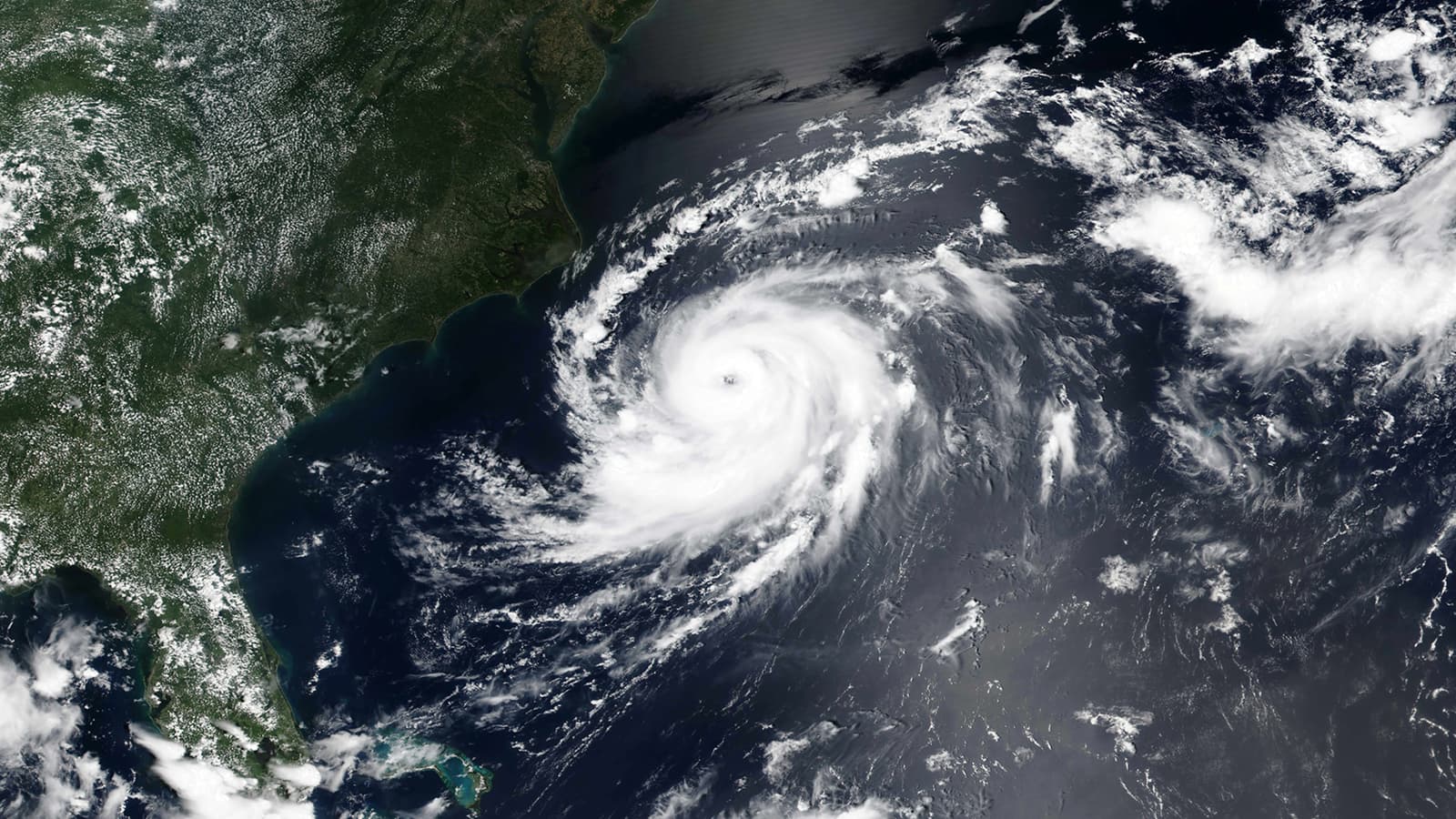
Our company holds a modeling license from Verisk, a US company that provides natural disaster risk models widely used in the global insurance market. Our in-house CEEM (Certified Extreme Event Modeler) certified personnel conduct risk analyses for natural disasters such as earthquakes (earthquake tremors, post-earthquake fires, tsunamis) and typhoons (strong winds, storm surges, floods).
For earthquakes, we analyze over 100,000 earthquake scenarios based on past earthquake records, the location of active faults, the plate structure of the Japanese archipelago, ground characteristics, and information such as building structure and age. We predict the magnitude of shaking and the resulting damage, considering a wide range of scenarios from massive earthquakes like the Nankai Trough earthquake to inland earthquakes. For typhoons, we use Verisk's Japan Typhoon Model, based on past typhoon paths, wind speeds, rainfall, topographic and ground conditions, and building information, to evaluate wind and water damage risks from over 250,000 scenarios, including large typhoons, strong winds, storm surges, and floods. (The scenarios in the risk model are constructed using actual damage data and Monte Carlo simulations.)
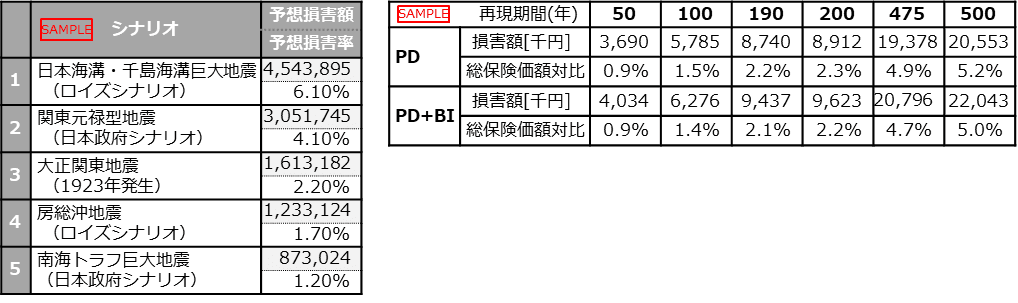
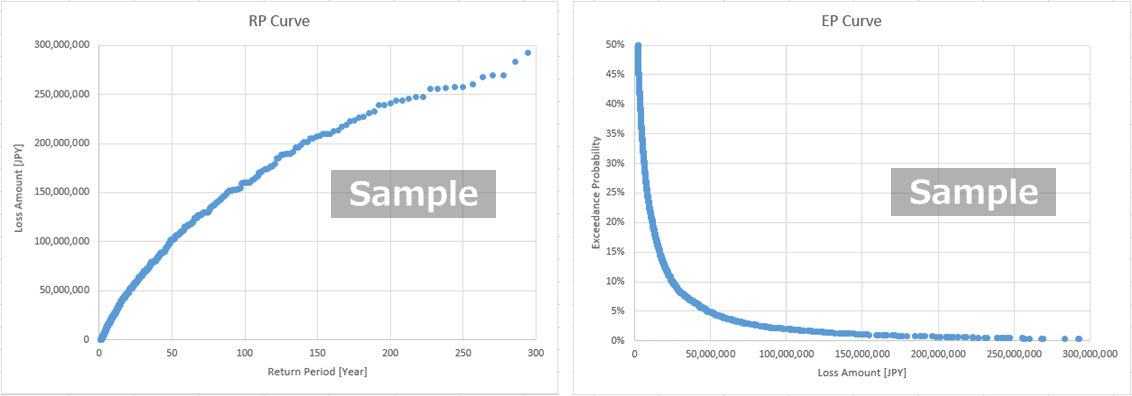
In this way, the risks associated with natural disasters are statistically evaluated from aspects such as "how frequently a disaster of that magnitude is statistically likely to occur" and "what kind of impact it will have if it does occur." The maximum damage event in the return period derived from these analysis results can be used to consider the payment limits for wind and flood damage risks in fire insurance and earthquake and tsunami risks in earthquake insurance. In addition, the average annual damage amount (AAL) calculated from all events in the model can be used as an indicator of net risk (net premium) to verify premium levels.